
Bedding Thread Count Guide: What Actually Matters


A lower-count sheet can outperform a higher-count sheet. That's the counterintuitive starting point for a useful bedding thread count guide: the number on the package describes part of the fabric's construction, not the quality of a night's sleep.
For households in Freehold, Albany, Schenectady, and Troy, the better question is whether sheets suit the sleeper, the mattress, and Upstate New York's changing seasons. A crisp summer bed and a softly layered winter bed don't need the same construction.
Recommended Thread Count Ranges for Every Fiber
For cotton sheets, 300 to 500 thread count is a practical starting point for balancing softness and durability, and counts above 500 aren't automatically better, according to Good Housekeeping's cotton-sheet testing guidance. The same guidance recommends skepticism toward claims above 1,000, which may reflect multi-ply construction or inflated counting rather than better yarn.
That starting range isn't a universal buying rule. A sleeper who likes cool, crisp fabric may prefer a lighter percale, while someone seeking a smooth, enveloping drape may prefer sateen.
Typical thread count ranges by fiber and weave
The following ranges are shopping targets, not quality grades or guarantees. Comparisons work best within the same fiber and weave category.
| Fiber | Weave | Typical Thread Count | Best For |
|---|---|---|---|
| Cotton percale | Plain weave | 200–400 | Crisp, breathable sheets for hot sleepers |
| Cotton sateen | Satin weave | 300–500 | Smoother, warmer drape for cool bedrooms |
| Egyptian or Pima cotton | Percale or sateen | 300–500 | Verified long-staple fibers with a softer feel and longer wear |
| Microfiber polyester | Plain weave | 200–400 | Budget beds and low-upkeep guest rooms |
| Linen | Plain weave | Judge by fabric weight and handfeel | Breathable summer sheets; weight is more useful than count |
| Bamboo viscose | Sateen or percale | Confirm fiber and assess construction | A silky feel; check the actual fiber description |
Cotton variety and weave aren't interchangeable descriptions. Egyptian or Pima identifies a cotton category; percale or sateen describes how the yarns are woven. A package can legitimately include both, but neither description replaces information about construction and care.
Linen needs a different comparison. Its characteristic texture and substantial yarns make cotton-style count comparisons unhelpful. For bamboo viscose, the useful starting point is the actual fiber description, followed by weight, feel, and laundering requirements.
How to use the ranges without overspending
A higher price needs a reason beyond a larger number. Better fiber information, well-finished seams, suitable pocket depth, and clear care instructions give a shopper something concrete to evaluate.
- For everyday beds: Favor comfortable fabric that tolerates the household's normal laundry routine.
- For a texture preference: Compare crispness or smoothness before comparing package claims.
- For an upgrade: Look for a meaningful improvement in yarn, construction, or fit rather than a numerical jump alone.
Choose the fiber and weave first, then select a count within the appropriate shopping range.
What Thread Count Measures and What It Misses
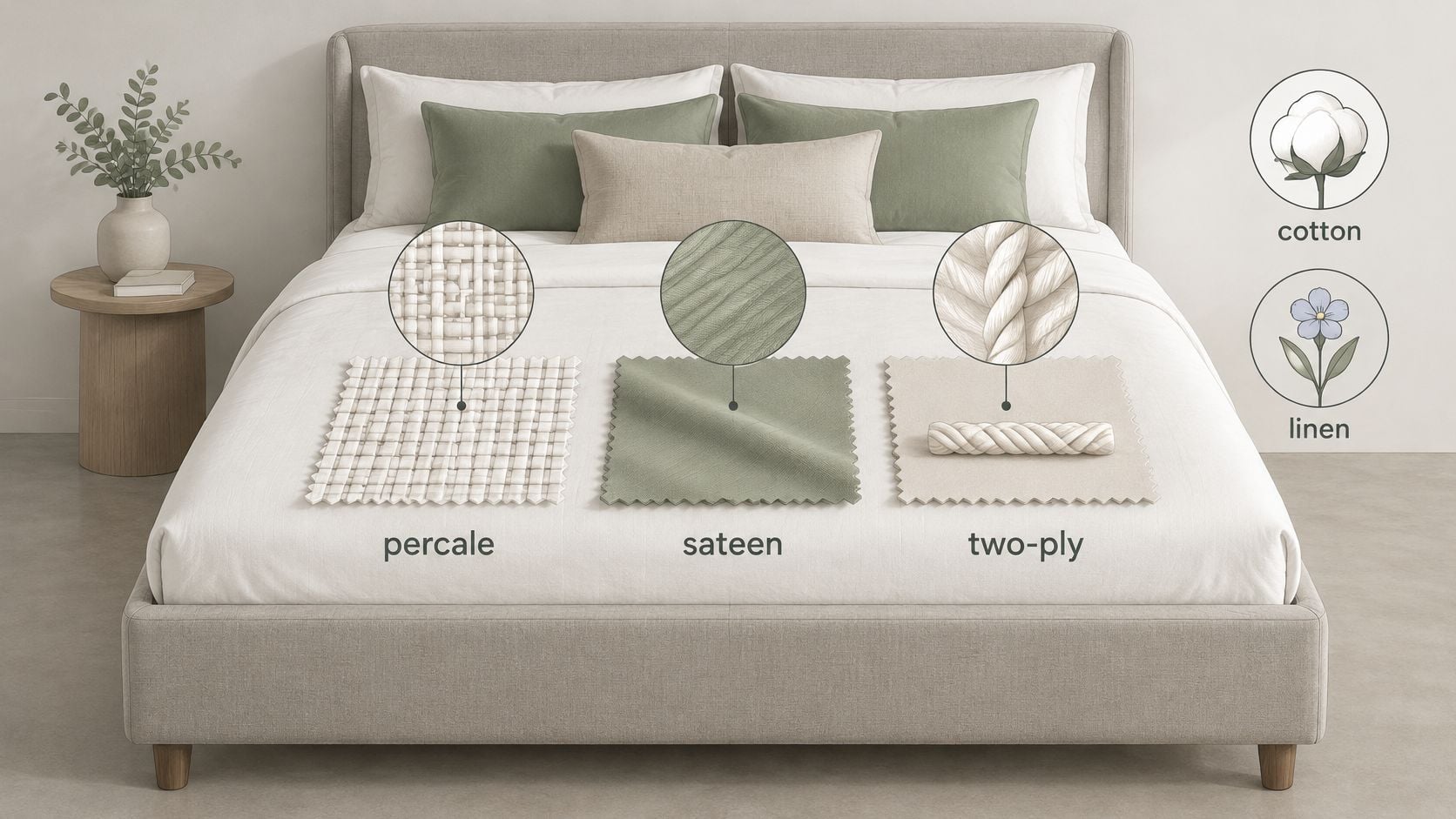
Thread count is the sum of lengthwise and crosswise yarns in one square inch of woven cloth. The lengthwise yarns are warp ends. The crosswise yarns are filling picks, also called weft. Add the ends and picks in that square and you have the count. The figure records construction density. It does not score how the finished sheet will feel in bed.
A worked example of an honest count
Under ASTM D3775-03a, fabric is measured without tension or folds, and every completed yarn counts as a single unit regardless of its plies; 150 warp ends plus 150 filling picks produces a 300 thread count, as explained in the technical correspondence hosted by the Federal Trade Commission.
Ply means the strands twisted together to make one yarn. Counting those strands separately can print a larger number without adding more yarns to the weave. Two packages can show similar figures and still be built differently. Match the counting method before you treat the numbers as equal.
That density still leaves fiber quality, yarn fineness, weave, finishing, and washed performance open. Bulky yarn at a high count can feel coarse. Fine yarn at a moderate count can feel smoother and hold its size after laundering. I read the number as one construction specification beside fiber, weave, and ply, then match it to the sleeper and to Upstate New York's humid summers and dry heated winters. There is no single count that is right for every bed.
For readers comparing woven household textiles beyond sheets, the SEYANTE guide to robe thread count provides additional context for evaluating another fabric purchase. The same caution applies: a numerical specification needs a material and construction description beside it.
Working definition: Thread count is a construction specification, not a quality score.
How Weave, Fiber and Ply Change Comfort and Durability
A crisp cotton sample sits beside a glossy, fluid one. Similar density on the labels, and the hand still splits. Weave sets the crossings. Fiber is the material in the yarn. Ply is whether that yarn is one strand or several twisted together. Thread count only records how many yarns fill the cloth.
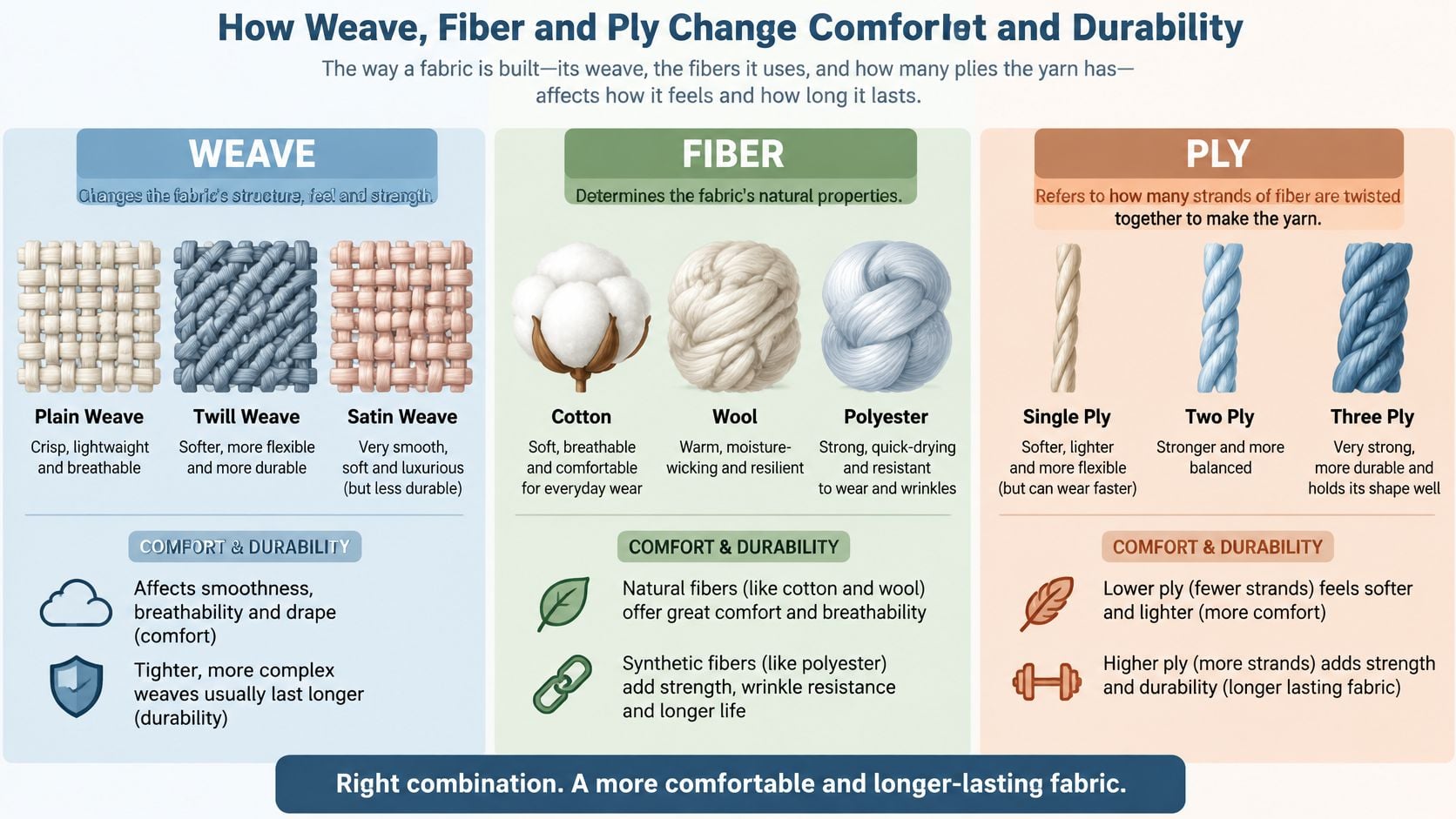
Percale uses a plain over-and-under structure. It feels matte, crisp, and lightly structured, which suits frequent laundering and sleepers who dislike fabric that clings. In a humid Upstate New York summer, that open face lets air move instead of trapping warmth against the body.
Sateen carries yarns across several crossings before they interlace again. The exposed floats give a smoother surface, a slight sheen, and a more fluid drape that can feel warmer through a long heating season. Those same floats sit on the face of the cloth, so pets, rough skin, and abrasive laundry wear them down faster than a tight plain weave.
Long-staple cotton, including verified Pima or Egyptian cotton backed by credible fiber information, spins with fewer protruding ends. That supports a smoother hand and steadier wear. A cotton name alone, with no material detail beside it, leaves the yarn's strength unknown.
Single-ply yarn can stay fine and supple. Multi-ply yarn adds body. Fine yarns wear thin when the weave is loose, and a tight weave still pills when the fiber is weak. I read extra bulk as substance, not as proof of a better surface. There is no universal count that fits every sleeper in this climate. A hot sleeper and a cold sleeper can want different weaves at the same number.
Rub the samples lightly and note smooth, fuzzy, or waxy. Drape each over a hand and compare stiffness, fluidity, and weight. Then look for even weaving, secure hems, and loose surface fibers. The bedding fabric types guide separates those material choices before feel narrows the set.
Weave, fiber, and ply change comfort and wear more than a matching thread count does.
Thread Count Myths Albany Shoppers Hear Most
"Six hundred has to beat three hundred." Capital Region shoppers say that while holding two cotton packages, treating the larger figure as the softer, longer-lasting sheet. The number is easy to rank. It does not tell you how the cloth will feel after a month of washing in a heated Albany bedroom.
Higher is always softer. Consumer Reports' sheet testing found no significant relationship between manufacturers' thread-count claims and performance: a highly rated 100% cotton percale claimed only 280, while some 400-count options performed worse. A printed count cannot predict whether you will like the hand of the fabric.
A 600-count sheet is automatically better than a 300-count sheet. Doubling the number can mean finer yarn. It can also mean strands twisted together and then counted as if each one were separate. Until fiber, weave, and ply are named, 600 is only a bigger numeral than 300.
Shoppers also use count as a stand-in for seasonal comfort. In an Upstate New York bedroom dried out by winter heat, a slick high-count sateen can feel close and slightly damp once the furnace runs, then cool when the thermostat drops. A more open cloth plus a blanket you can kick off often sleeps better. Humid summers reverse that: a dense, finished surface holds moisture against skin longer than a looser weave.
Thread count predicts how long sheets last. Wash cycles, mattress fit, and yarn quality do more of that work. Persistent fuzz points to short fibers and a finish already breaking down. Corners that slip are a fit problem. A moderate-count set that stays put and comes out of the dryer without a rough nap can outlast a denser sheet bought for the band.
Fiber, weave, ply, and finish still belong on the label. The buyer's checklist later in this guide covers those items in order. I would match the set to how you sleep through an Upstate year, not to the largest number on the package.
Matching Thread Count to Your Sleep Style and Climate
No single count suits every sleeper. Someone who wakes overheated needs a different starting point from someone who pulls on another blanket before falling asleep.
Cotton remains a useful material to consider, but preference isn't a performance guarantee. Cotton Incorporated's U.S. bedding insights describe consumer preference for cotton's quality and comfort, supporting a shopping discussion centered on function rather than prestige.
Thread count targets by sleeper and setting
These are practical comparison targets, not promises of cooling, warmth, or longevity. For linen, the selection should follow fabric weight and feel rather than the cotton target in a shared row.
| Sleeper or Setting | Weave to Prefer | Thread Count Target | Why It Fits |
|---|---|---|---|
| Hot sleeper | Percale | 200–300 | A breathable construction with less enclosing warmth |
| Cold sleeper | Sateen | 300–500 | Smoother surface and warmer drape |
| Humid summer bedroom | Percale or linen | 200–300 for cotton; assess linen by weight | A lighter construction favors moisture release |
| Winter bedroom | Sateen with blanket layers | 300–400 | Warmth comes mostly from adjustable layers |
| Children's beds | Percale cotton | 200–300 | A practical starting point for frequent washing |
| Guest room | Microfiber or cotton blend | 200–300 | Budget-friendly, straightforward care |
Build around Upstate New York's seasons
Humid summer bedrooms favor lightweight bedding that doesn't feel enclosing. A hot sleeper may still prefer that setup during winter, especially in a strongly heated room.
Dry, heated winter bedrooms call for adjustable warmth rather than a permanent move to denser sheets. A breathable base with removable blankets lets sleepers change insulation without replacing the entire bed setup.
Children's bedding should prioritize easy washing and secure fit. Guest-room purchases benefit from care instructions that remain manageable between visits, not a prestigious specification that requires special handling.
Tip Top Furniture & Mattresses staff are trained to use a series of questions to narrow down suitable bedding. Useful answers include whether the sleeper overheats, prefers crisp or silky fabric, uses a topper, and regularly changes blankets.
The seasonal bedding and mattress setup guide offers a practical way to coordinate those choices across the year.
A Buyer's Checklist for Reading Bedding Labels
A package printed “cotton blend” and “600 thread count,” with no fiber percentages, is still an unfinished spec. The front panel is selling a number. The content label is where the textile has to be named.
Under the Federal Trade Commission's textile-labeling guidance, covered bedding, including sheets, pillowcases, comforters, and quilts, must disclose its fiber content. Read that line before you trust the printed count. Thread count is one construction figure. Fiber, weave, and ply sit next to it, and a large number on an unnamed blend does not describe how the sheet will feel in bed.
Read the specification before comparing the price
- Confirm fiber percentages. “Blend,” “cotton-rich,” or a cotton photograph is not a composition. Find each fiber and its share.
- Find a named weave. Percale or sateen is a construction you can compare. Soft, silky, or premium is a mood.
- Read ply beside the count. Single-ply or multi-ply tells you what the advertised number is adding up. No ply stated means the count is incomplete.
- Match care limits to wash day. Water temperature, dryer heat, and bleach rules have to fit the routine you will run.
- Keep finish separate from construction. Wrinkle resistance, added softness, or a shrinkage note can change handfeel. None of those lines replaces fiber, weave, or ply.
- Compare equivalent sets. A price only makes sense when fiber, weave, piece count, and intended use are close.
- Check pocket depth against the full stack. Add mattress depth and any topper, then set that total next to the fitted sheet's stated pocket.
- Handle what print cannot show. Weight, hem stitching, and elastic recovery tell you whether the written spec will stay on the bed.
The bed sheet measurements guide separates mattress size from the extra fabric a fitted sheet needs for a secure fit. A smooth hand can still fail when the corners climb.
Labeling pitfalls worth pausing over
- A count with no fiber line: The headline number never identifies the material.
- “Pure” on the front, a blend on the label: Front-panel wording does not override the composition.
- Feel words and no weave: Silky names a hand, not silk. Hotel quality names an impression, not a construction.
- A price on a vague set: Count the pillowcases and the fitted sheet before calling one package cheaper.
I would leave a label that will not put fiber, weave, and ply in the same place as the count. Ask for that full specification. Attractive packaging is not an identifiable textile.
Caring for Bedding So the Feel Lasts
Care determines whether a comfortable sheet remains pleasant after repeated laundering. Excessive heat, detergent residue, and rough handling can undermine a thoughtfully chosen fabric.
A first wash before use removes handling residue and reveals the sheet's washed feel. It also gives the household a chance to assess fit after any initial dimensional change.
A practical washing and drying routine
- Use suitable water temperatures: Cool or warm water is a sensible routine where the care label permits it; specialty fibers may need gentler treatment.
- Measure mild detergent: Excess detergent can leave residue, so follow the product's dosing guidance and account for load size.
- Skip routine fabric softener: Coatings can interfere with absorbency and breathability, especially when those qualities motivated the purchase.
- Keep drying heat low: Remove sheets promptly rather than leaving them exposed to unnecessary heat.
- Reduce abrasion: Wash sheets away from zippers, hooks, and rough items; turn sateen pillowcases inside out to protect their surface.
Linen's relaxed texture doesn't require aggressive drying to look acceptable. Percale may wrinkle, but attempting to eliminate every crease with heat can work against good care.
Rotation and replacement
Keeping a spare set allows each washed set to dry completely before storage. Rotation also makes it easier to inspect corners, hems, and frequently rubbed areas without leaving the bed uncovered.
Care priority: A fabric that suits the household's laundry habits is more useful than a delicate upgrade that receives unsuitable treatment.
Thinning patches, persistent uncomfortable pilling, and small holes near stressed corners are reasons to assess replacement. The guide to how often sheets should be changed helps connect regular washing with a manageable household routine.
Choose Your Bedding Set at Our Freehold Showroom
Fiber and weave come first. Pick those, set a thread-count target, then check fiber disclosure and fit. Thread count is one construction spec. Read it beside fiber, weave, and ply, and match that mix to the sleeper and to Upstate New York: cold winters, humid summers, and bedrooms that swing between the two. A higher number does not rescue the wrong cloth.
I treat count as a filter, not a trophy. If a warm sleeper needs a more open weave, chasing extra threads will not cool a July night in the Capital Region.
Tip Top Furniture & Mattresses is family-owned in Freehold, NY, and has served Greene County and the Greater Albany Capital Region, including Albany, Schenectady, and Troy, since 1978. Staff work through a series of questions so the shortlist fits temperature, support, and the bed you already own.
The 35,000-square-foot showroom holds furniture, mattresses, bedding, flooring, and window treatments, with selections from 50+ trusted manufacturers. The Bedroom collection includes beds, dressers, nightstands, chests, and storage, so sheets are chosen with the rest of the room, not after the frame is already a problem.
Professional Design Services, available since 1984, coordinate furniture, décor, window treatments, and flooring. The free Room Planner shows layout to scale before you buy. Custom ordering covers style, size, wood, fabric, and finish, including USA-handcrafted solid-wood Amish furniture. USA-made mattresses and a high-tech bed-matching system narrow comfort and support. Clearance Corner discounts quality pieces, and flexible financing, including special financing on a Synchrony Home Card (see store for details), is one way to spread a larger room update.
A bed that fits the floor plan still needs circulation space and reachable storage. Bedding has to match the sleep surface, not just the frame name on the tag.
Bring a mattress measurement, whether the sleeper runs hot or cold, and a photo of the bedroom. Fabric likes and dislikes are as useful as a budget. The complete guide to bedding, mattress protectors, and comforters covers the layers around the sheets.
Visit Tip Top Furniture & Mattresses in Freehold with those measurements and sleep preferences. That conversation turns fiber, weave, ply, and thread count into a bed that stays comfortable through the local year.