
Maximize Your Kitchen: Smart Corner Cabinet Solutions

A lot of kitchens around Albany, Schenectady, Troy, and the surrounding Capital Region have one cabinet that gets opened with a little hesitation. It's the corner cabinet. A roasting pan disappears into the back, a small appliance gets shoved behind mixing bowls, and before long that whole area feels like wasted square footage.
That frustration is common for a reason. Corner cabinets are awkward by shape, tricky by access, and often poorly matched to the way a household cooks. The good news is that there isn't just one fix. Some homes need a simple organizer. Some need smarter hardware. Some benefit most from custom cabinetry planned around the room from the start.
For families visiting the Freehold, NY showroom from Greene County or the greater Albany area, this is often one of the most practical design questions in the whole kitchen. Interest keeps growing, too. The global corner cabinet organizer market was valued at $3.2 billion in 2024 and is projected to reach $5.7 billion by 2033, with a 6.8% CAGR, according to Market Intelo's corner cabinet organizer market report. That says something simple and important. Homeowners want to stop wasting corner space.
Table of Contents
- That Awkward Corner Cabinet You Never Open
- Why Corner Cabinets Waste So Much Space
- Exploring Traditional Corner Cabinet Solutions
- Advanced Pull-Outs for Maximum Accessibility
- How to Choose the Right Solution for Your Kitchen
- The Ultimate Fix Custom Cabinetry from Tip Top
- Create a Smarter Kitchen with Your Local Experts
That Awkward Corner Cabinet You Never Open
Every neighborhood has kitchens with the same habit. The everyday dishes stay within easy reach, but the corner cabinet becomes storage for the things no one wants to wrestle with. Holiday platters slide to the back. Slow cookers get stacked behind colanders. A lid falls over, and suddenly the cabinet feels unusable.
That doesn't mean the cabinet is worthless. It usually means the cabinet was built around the room's shape, not around daily routines. In older kitchens around Albany and Greene County, that's especially common. The cabinet box may be deep enough to hold plenty, but if a person has to kneel, lean, and reach into darkness just to grab one pan, the space stops being practical.
A familiar example helps. A homeowner may store baking supplies in a lower corner cabinet because there seems to be plenty of room. But flour, mixing bowls, cake pans, and measuring tools all have different shapes. The front fills quickly, the back becomes a jumble, and the cabinet turns into a place for “maybe someday” storage instead of regular use.
Most corner cabinet problems aren't caused by lack of space. They're caused by lack of access.
That's why the right corner cabinet solutions can feel so dramatic. The cabinet itself hasn't moved. The kitchen footprint hasn't changed. What changes is how the contents come forward, rotate into view, or get divided so the back of the cabinet no longer feels off-limits.
For many households, that means thinking beyond the old idea that a corner is just a tough spot that has to be tolerated. It can become a home for pots and pans, pantry items, mixing equipment, or even serving pieces, if the storage method fits the cabinet type and the budget.
A helpful starting point is simple:
- If access is the main problem, a pull-out or rotating option may help most.
- If clutter is the main problem, dividers, bins, or shelf changes may do enough.
- If the whole kitchen is being updated, custom planning often produces the cleanest result.
That shift in thinking matters. The “black hole” cabinet isn't a dead end. It's usually a design problem with a design solution.
Why Corner Cabinets Waste So Much Space
Some corner cabinets feel frustrating because of poor organization. Most feel frustrating because of geometry.
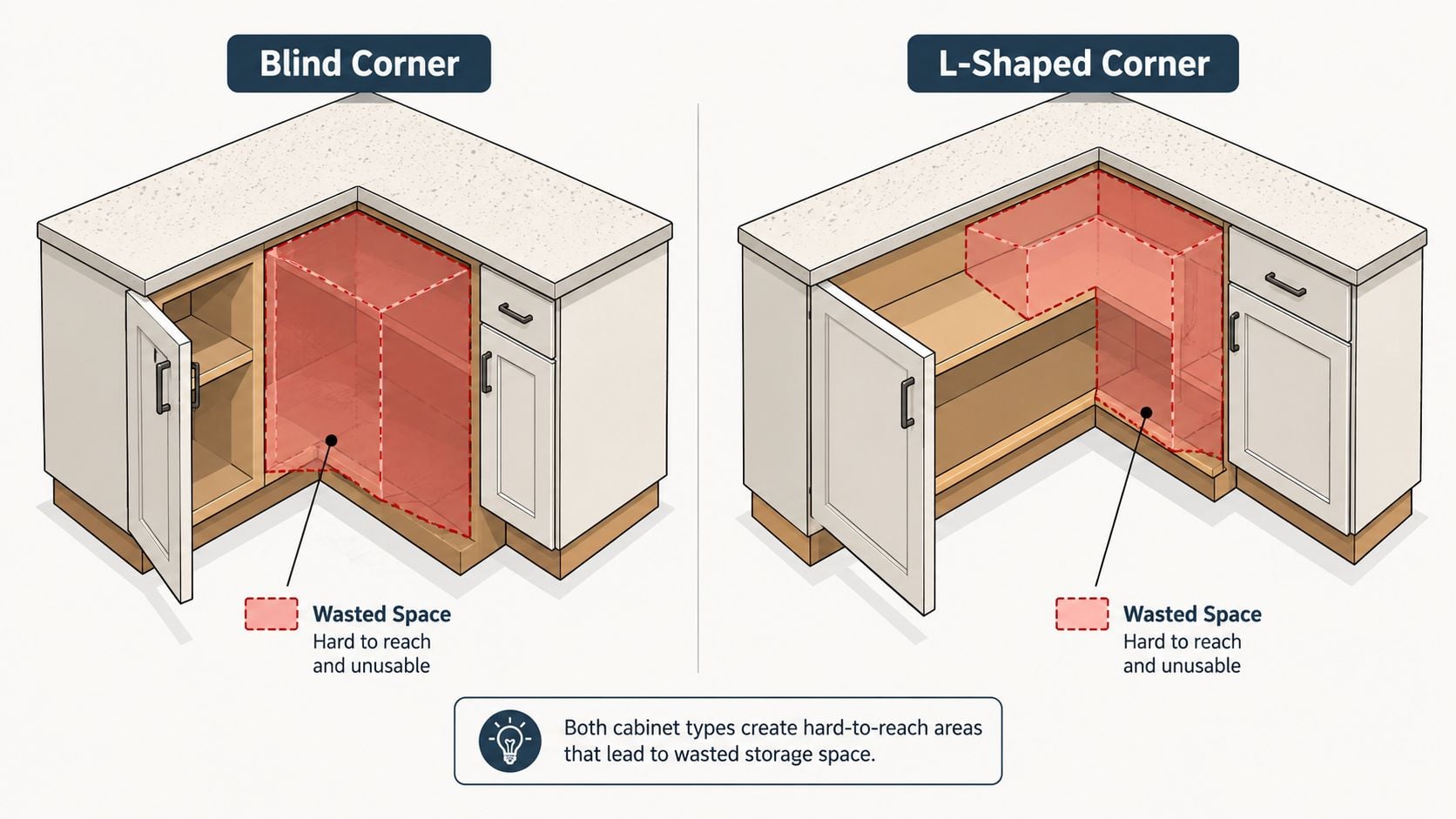
Two corner types that cause most of the trouble
The first is the blind corner cabinet. From the outside, it often looks like a regular base cabinet with one door. Inside, part of the cabinet stretches sideways into hidden space. A person can reach the front area, but the far section sits out of sight and out of reach.
The second is the L-shaped corner cabinet. This style follows the angle where two cabinet runs meet. It can offer more visible room than a blind corner, but the deep back area still creates access issues.
Both types have the same core problem. A square or angled cabinet box doesn't naturally match the shape of most items people store inside it. Pots, platters, appliances, dry goods, and mixing bowls don't line up neatly with those deep interior corners.
Why the shape works against the homeowner
The waste starts before a single item is stored. A standard corner cabinet insert can waste approximately 34% of the available storage space due to its shape alone, while advanced options are designed to reclaim nearly all of that blind space, according to this video explanation of corner cabinet efficiency.
That number helps explain why so many kitchens feel inefficient even when the cabinet looks large. The cabinet may have volume, but a meaningful part of that volume doesn't translate into usable storage.
A few things make the problem worse:
- Depth without visibility means items disappear behind the front row.
- Wide interior corners make it hard to stack objects neatly.
- Door openings limit reach even when the cabinet box itself is large.
- Mixed item sizes create dead zones between and behind stored pieces.
For homeowners trying to improve workflow before a full renovation, practical planning matters just as much as hardware. This guide to making a kitchen more efficient is useful because it looks at how storage choices affect the way a kitchen functions day to day.
Practical rule: If a cabinet holds plenty but still feels useless, the problem is usually access geometry, not a shortage of storage.
That's why corner cabinet solutions vary so much. No single organizer fixes every corner because not every corner fails in the same way.
Exploring Traditional Corner Cabinet Solutions
A lot of Albany-area homeowners walk into our Freehold showroom assuming the only worthwhile fix is a high-end pull-out system. After helping families with storage problems since 1978, we can tell you that is not always true. Traditional corner cabinet options still have a place, especially if the goal is to improve function without turning a smaller project into a full remodel.
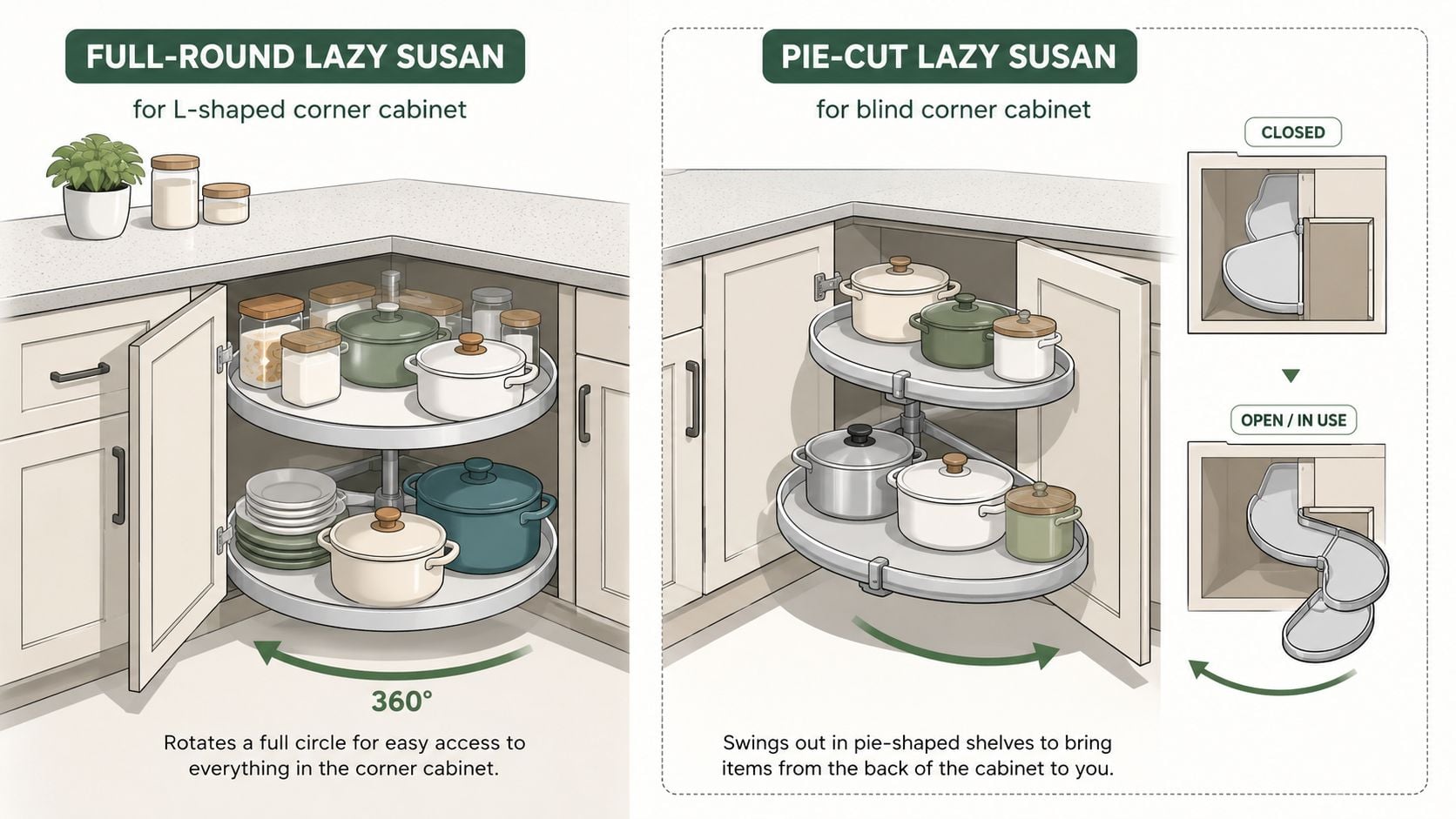
The classic Lazy Susan
The Lazy Susan remains the best-known traditional solution because the idea is easy to grasp. A round shelf spins, and stored items rotate into view. For many households, that simple motion is a real improvement over kneeling on the floor and reaching into a dark back corner.
It works best for items that are not too tall, too heavy, or too wide. Mixing bowls, dry goods, plastic containers, and smaller serving pieces usually do well here. Pots with long handles and oversized appliances usually do not.
The trade-off is shelf shape. Because the shelves are round and often built around a center pole, part of the cabinet becomes harder to use efficiently. You gain rotation, but you do not get the full flat storage area that some newer systems provide.
That does not make a Lazy Susan a poor choice. It makes it a practical choice for the right cabinet and the right storage habits.
Diagonal corner cabinets
A diagonal corner cabinet changes the opening itself. Instead of hiding the cabinet behind one run of cabinetry, it places the door across the corner, which gives the user a more centered approach.
Homeowners often like this style for one simple reason. It feels less cramped.
In a traditional kitchen, that can matter as much as raw storage capacity. The cabinet is easier to approach, the door swing feels more natural, and the design often blends well with classic door styles. If the kitchen already has a comfortable layout and the corner mainly holds serving pieces, small appliances, or backup pantry items, a diagonal cabinet can be perfectly serviceable.
The limitation is reach. The opening is better, but the deepest part of the cabinet can still behave like the attic of the kitchen. You can store things there, yet you probably will not want to access them every day. Homeowners comparing cabinet shapes sometimes benefit from looking at broader ideas for efficient kitchen layouts, especially when a tight floor plan makes every turn and reach matter.
Fixed shelves and simple retrofits
Fixed shelves are the oldest solution, and they are often the budget solution. In plain terms, they work best when expectations are modest.
A fixed corner shelf is like a deep closet shelf in a hallway. The front is usable every day. The back tends to become storage for things you need once in a while, such as holiday platters, extra paper goods, or the roasting pan that only comes out in colder months.
For homeowners who are not replacing cabinetry yet, a few modest upgrades can make that setup less frustrating:
- Low-profile bins keep similar items together so one grab pulls out a category, not a pile.
- Angled or triangular organizers use the cabinet shape better than standard rectangular tubs.
- Shelf dividers help with trays, cutting boards, and baking sheets that otherwise slump into each other.
- Turntables on fixed shelves can help in selected spots, even if the whole cabinet is not built as a rotating system.
Sometimes the smartest budget move is not another shelf at all. It is better access. Homeowners considering a retrofit often get useful ideas from this guide to building drawers for cabinets, because drawers show why bringing storage outward usually feels easier than reaching inward.
Traditional corner cabinet solutions make the most sense when the household wants lower cost, simpler hardware, and storage for lighter or less frequently used items.
Advanced Pull-Outs for Maximum Accessibility
A well-designed pull-out corner system changes the daily experience of the kitchen. Instead of kneeling on the floor and reaching into a dark back corner, the storage comes out where you can see it and use it.
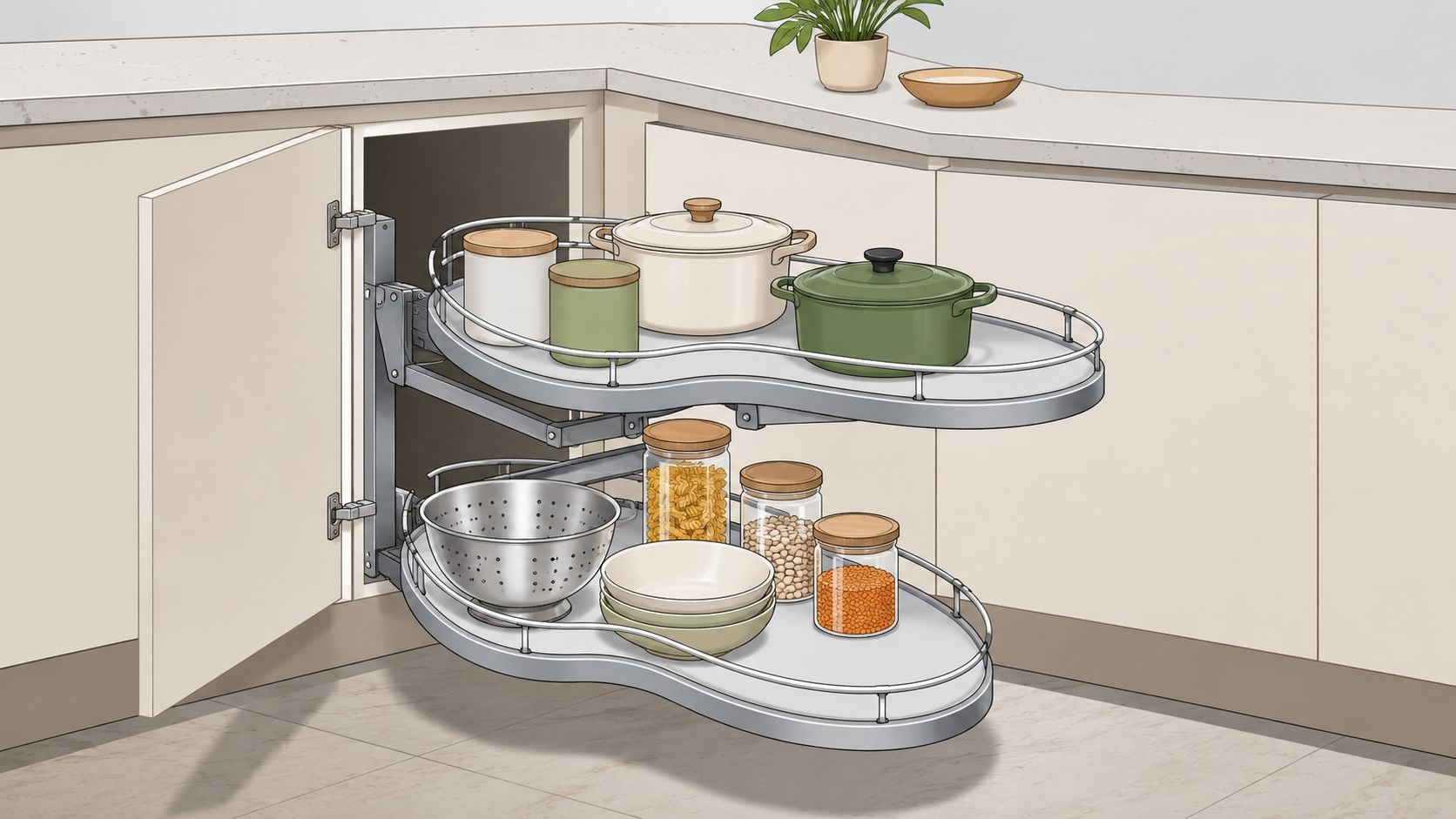
For many Albany-area homeowners, this is the point where corner storage starts to feel less like a compromise and more like a working part of the kitchen. In older homes especially, the footprint may stay the same, but better access can make the room feel far more usable.
How modern pull-outs work
The main advanced options are blind corner pull-outs, swing-out trays, and corner drawers. All three aim to solve the same problem. The difference is how they move the contents into reach.
A blind corner pull-out uses connected shelves or baskets that travel outward in stages. One section comes forward first, then the hidden section follows into the open. It works a bit like pulling train cars around a bend. Items that once sat out of reach end up in front of you.
A swing-out tray system relies on pivoting hardware. The trays glide and turn outward so you can approach cookware from the front instead of stretching over a shelf. That makes a noticeable difference for heavier pots, mixing bowls, and small appliances.
Corner drawers solve the problem from a different angle. The cabinet face is built as a set of angled drawers, so storage pulls straight toward the user. This feels familiar right away. Open, look down, grab the item, close.
Where advanced systems earn their cost
These systems tend to make the most sense when the household uses the corner cabinet often, not just for once-a-year platters. If you store sauté pans, Dutch ovens, food containers, or prep tools there, easy retrieval matters more than theoretical capacity on paper.
Another advantage is visibility. Once trays or baskets move fully into view, it becomes easier to group like items, spot duplicates, and keep the cabinet from turning into a catch-all zone. Homeowners who are planning layout changes often benefit from reviewing room and cabinet measurement basics before choosing storage hardware, because pull-out performance depends on real clearance, not showroom photos.
There is also a finish and upkeep side to the decision. If a kitchen refresh includes repainting existing cabinets while improving the interiors, Newline Painting's kitchen cabinet guide offers a useful overview of what to consider on the surface side while the inside storage is being upgraded.
Advanced hardware is not the right answer in every kitchen, though. From what we see in the Freehold showroom, four factors usually decide whether a pull-out is worth the investment:
- Opening size: The interior may be large, but the door opening controls what can fit and operate well.
- Door and hinge clearance: Nearby walls, appliances, and handle projections can interfere with the movement path.
- Weight of stored items: Some systems handle cookware well, while others are better for pantry goods or lighter pieces.
- Budget for hardware and installation: Better access usually costs more because the mechanism is doing more work.
Better access often serves a household more effectively than maximum raw capacity. A corner cabinet is only useful if the items inside can be reached without frustration.
That is why balanced advice matters. Some articles jump straight to expensive full-remodel answers, but many Capital Region homeowners need to improve what they have first. Advanced pull-outs can be an excellent middle ground. They cost more than simple organizers, but far less than rebuilding the whole kitchen, and in the right cabinet, they solve the central problem: getting the contents out where people can use them.
How to Choose the Right Solution for Your Kitchen
Choosing among corner cabinet solutions gets easier when the decision is grounded in use, not appearance. The best option is the one that matches the way the household cooks, shops, and stores things.
Corner Cabinet Solution Comparison
| Solution Type | Accessibility | Typical Cost | Best For |
|---|---|---|---|
| Fixed shelves | Low | Lower | Rarely used serving pieces, overflow storage |
| Basic organizer inserts | Moderate | Lower to moderate | Pantry goods, lids, grouped small items |
| Lazy Susan | Moderate | Moderate | Everyday containers, bowls, medium-size kitchen items |
| Swing-out trays | High | Higher | Pots, pans, heavier cookware |
| Blind corner pull-out | High | Higher | Deep blind corners that need full retrieval |
| Corner drawers | High | Higher | Homes that want easy, drawer-style access |
| Custom corner cabinetry | Very high | Varies by scope | Remodels, unusual layouts, exact fit needs |
A table like this helps, but it doesn't replace cabinet measurement. Many disappointments happen because a homeowner chooses a system based on a photo, then discovers the opening, hinge path, or nearby appliance handle won't allow it to operate correctly.
What to measure before choosing anything
A practical checklist keeps the process simple.
- Measure the cabinet opening: The inside box may be generous, but the usable opening controls what can be installed.
- Check door swing and nearby obstacles: A dishwasher handle, wall, or peninsula edge can interfere with moving hardware.
- Look at what's stored there: Heavy appliances need different support than spices or snacks.
- Decide whether the project is a retrofit or a remodel: Existing cabinets limit some choices.
For homeowners planning a broader kitchen refresh, it's also smart to think about finish and surface updates at the same time as storage. This overview from Newline Painting's kitchen cabinet guide is a useful reference for understanding how cabinet appearance and cabinet function often need to be considered together.
Another smart step is room planning. Before changing one corner, it helps to confirm how that change affects circulation, appliance clearance, and nearby furniture. A measuring guide like how to measure a room for furniture is useful because the same discipline applies in kitchens. Fit first. Visual appeal second.
A corner cabinet should be chosen for what comes out of it most often, not for what could theoretically fit inside it.
For readers who are still sorting through possibilities, a free online room planner can also help visualize clearances and confirm whether a pull-out, drawer, or simple organizer makes the most sense in the available footprint.
The Ultimate Fix Custom Cabinetry from Tip Top
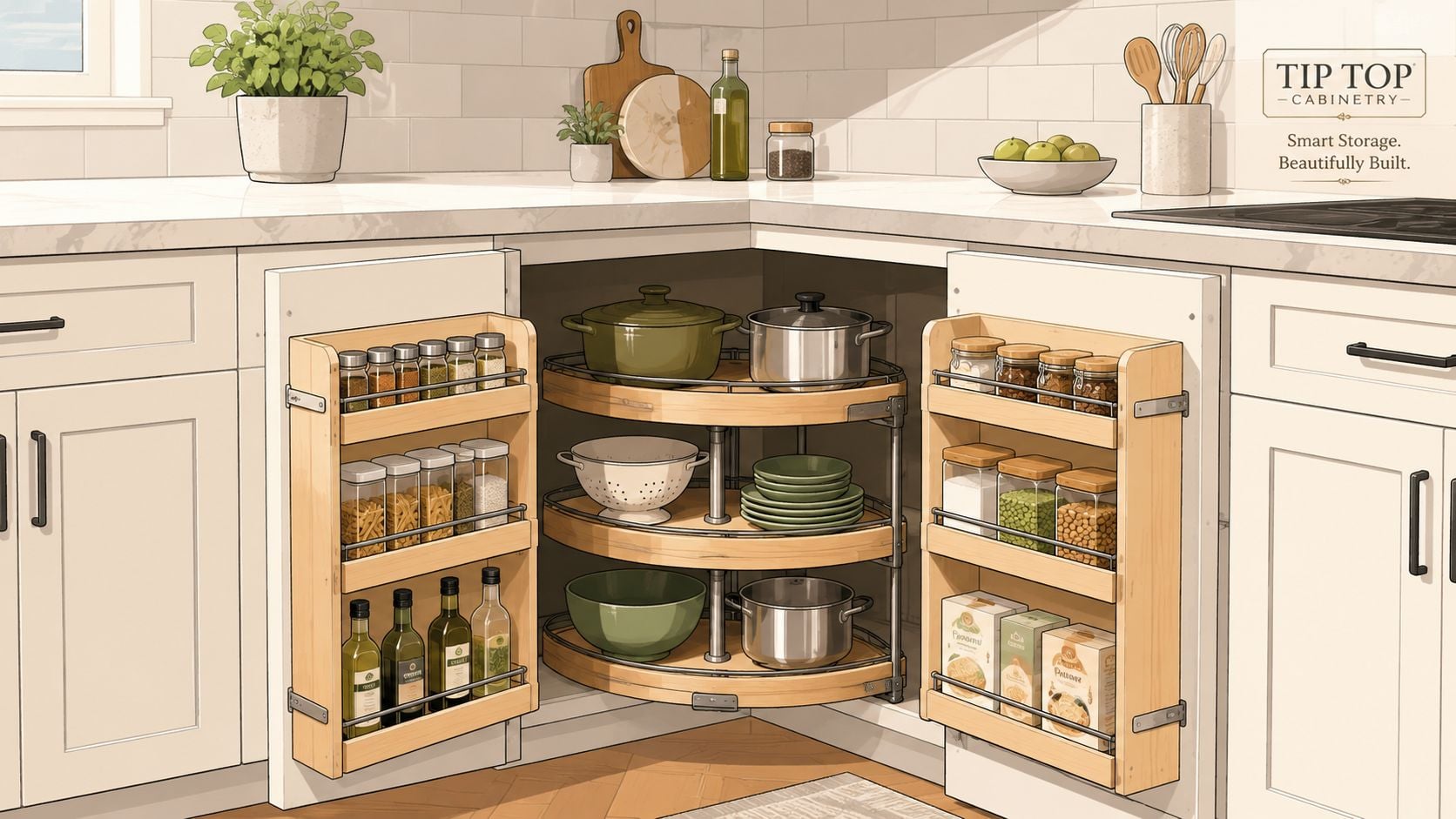
Some kitchens don't respond well to off-the-shelf fixes. The opening may be unusual. The layout may be tight. The homeowner may want the corner cabinet to match new finishes, improved storage needs, and the style of the rest of the room. That's when custom cabinetry becomes the strongest long-term answer.
When custom is the smartest path
Custom corner cabinets aren't just about appearance. They allow the storage plan, door style, shelf adjustability, and hardware to work together from the beginning. That matters in kitchens where every inch has to serve a purpose.
A 2024 study cited by the National Kitchen and Bath Association found that custom-designed corner cabinets with adjustable shelving can increase storage efficiency by up to 35% compared to standard fixed-shelf units, as referenced in this summary discussing custom corner cabinet efficiency. That kind of gain explains why custom work can make sense in small kitchens, irregular layouts, or homes where the corner cabinet has always been a weak point.
There's also the matter of style continuity. In many upstate New York homes, the kitchen connects visually to dining and living spaces. A custom solution can help the cabinetry feel intentional instead of patched together.
Why local design help matters
A local, family-owned business with a long history in home interiors offers real value. Since 1978, the Freehold showroom has served homeowners across the Greater Albany Capital Region, and professional design services have been available since 1984. That depth matters when a project calls for matching existing finishes, adjusting for room quirks, or coordinating cabinetry with flooring, dining furniture, and the rest of the home.
For homeowners drawn to Amish-made furniture, custom work can be especially appealing. Solid wood construction, heirloom quality, and finish flexibility fit well with kitchens that need durability as much as beauty. The ability to personalize wood type, size, and finish often makes a custom corner solution feel less like a workaround and more like part of the home's permanent design.
A good place to explore those options is the custom Amish cabinets page, especially for households that want a corner cabinet solution built around craftsmanship rather than compromise.
Create a Smarter Kitchen with Your Local Experts
No homeowner has to keep living with a corner cabinet that wastes space and patience. Some kitchens need a simple insert. Some benefit from a rotating shelf. Some call for a pull-out system that brings the whole cabinet into reach. Others deserve a custom answer that fits the room perfectly.
The right choice usually comes down to four questions:
- What needs to be stored there
- How often those items are used
- Whether the existing cabinet can accept new hardware
- How much the household wants to invest now versus later
For families in Albany, Schenectady, Troy, Greene County, and nearby communities, it helps to see these options in person before making a decision. A moving shelf, a corner drawer, and a custom cabinet can look similar in photos, but they feel very different when opened and used.
Design support also matters. A room doesn't function as separate pieces. Cabinet storage, flooring, dining furniture, lighting, and traffic flow all affect each other. That's why a consultation can save time and prevent expensive mistakes. Homeowners who want a more coordinated plan can start with interior design consultation services to sort through layout, finish, and function at the same time.
A smarter kitchen often starts with one awkward corner. Solving that one problem can make the entire room feel calmer, easier to use, and better suited to daily life.
For homeowners across the Greater Albany Capital Region, Tip Top Furniture & Mattresses offers the kind of practical help that makes kitchen projects feel manageable. The family-owned Freehold, NY showroom has served the region since 1978, with professional design services available since 1984, flexible financing to simplify larger purchases, and a one-stop shopping experience that includes furniture, décor, flooring, custom options, and heirloom-quality Amish craftsmanship. Readers who are weighing a kitchen update can visit the showroom, book a complimentary design consultation, explore custom ordering, review financing options, or browse the Clearance Corner for high-quality pieces at a strong value.