10 Creative Alternative Headboard Ideas for 2026

Some bedrooms are perfectly functional and still feel unfinished. The bed is in place, the dresser fits, the lamps work, but the wall behind the bed never quite lands. It doesn't have enough weight to anchor the room, and buying a traditional headboard isn't always the right answer.
That's where alternative headboard ideas earn their keep. They let you add shape, texture, storage, color, or softness without locking yourself into a bulky piece that may not suit the room, the budget, or the way you live. In the Capital Region, that matters. Some homes call for flexibility. Others need smart workarounds because walls are old, layouts are tight, or you want a more personal look than a matching bedroom set can provide.
Reimagining Your Bedroom Beyond the Basics
A lot of people start in the same place. The bed frame is fine, the mattress is comfortable, and the bedding is fresh, but the room still feels flat. The missing piece is often visual height behind the bed.
That's one reason alternative headboards took off so quickly. The trend grew fast in the 2010s with the rise of visual DIY platforms, and Pinterest reported over 1.2 million pins related to headboard alternatives by 2017 in a trend summary highlighted by So Fresh & So Chic. Once people saw that a painted arch, a textile, or a row of panels could look intentional, the standard upholstered rectangle stopped feeling like the only option.
In practice, the best results usually come from treating the bed wall as a design feature rather than a furniture problem. Sometimes that means paint. Sometimes it means reclaimed wood. Sometimes it means hanging a vintage quilt and letting the bedding do the rest.
If you're still trying to pin down the mood you want, these tips for stylish bedroom walls are useful for narrowing down whether your room needs art, texture, color, or symmetry.
Practical rule: If the room feels unfinished, don't assume you need more furniture. Often you need a stronger focal point.
The other advantage is flexibility. Alternative headboard ideas work for homeowners who want a custom look, renters who need a no-drill solution, and families who'd rather put their money into the mattress or the dresser and keep the wall treatment simple. If you want to map out the room before making changes, a good place to start is home design guidance for where to begin.
Finding the Right Headboard Idea for Your Home
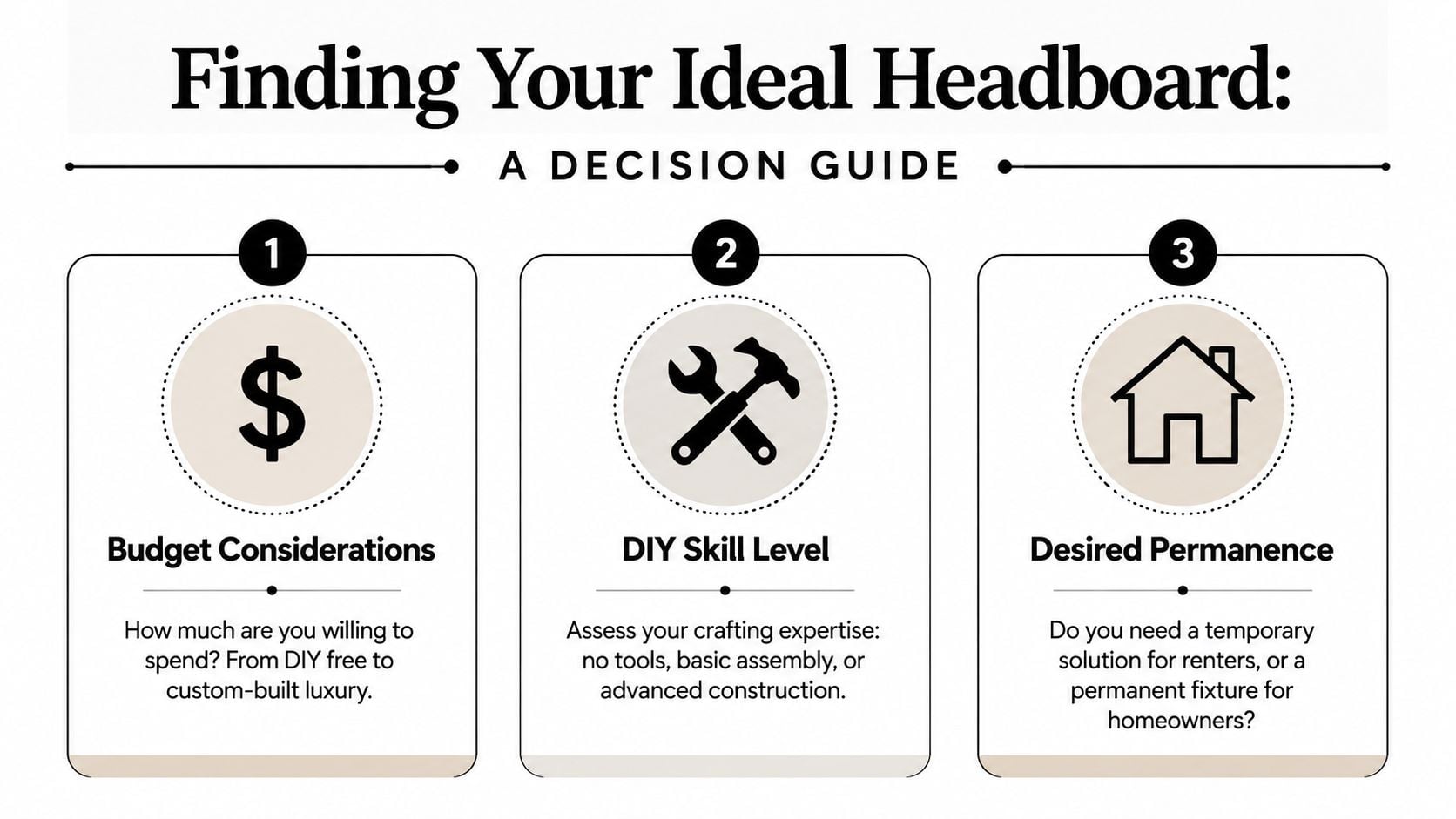
The right idea depends on three things more than anything else. Budget, skill level, and permanence. If you sort those out first, the rest gets easier.
Start with the budget reality
Cost is a real driver here, not an afterthought. A 2024 Statista report found that 41% of U.S. homeowners chose headboard alternatives to stay under a $300 budget, compared to traditional headboards averaging $800, a comparison summarized by Angi. That's why painted shapes, fabric hangings, and wall-mounted features keep gaining ground.
If your budget is tight, lean toward ideas that use the wall itself as the design element. Paint, wallpaper, and textiles usually stretch furthest. If you have more room to spend, upholstered panels and wood features deliver a more built-in look.
Be honest about your DIY ceiling
Some projects ask for tape, a level, and patience. Others ask for a saw, a sander, and comfort locating studs. There's no prize for picking the hardest project.
A simple way to judge it:
- No-tools comfort zone means removable wallpaper, a hanging textile, or leaning a decorative screen behind the bed.
- Basic DIY confidence opens up painted arches, framed panels, and lightweight wall-mounted décor.
- Advanced DIY readiness is where reclaimed wood walls and custom upholstered panels make sense.
If you don't enjoy measuring twice, cutting once, and correcting mistakes calmly, skip anything structural.
Decide how permanent you want this to be
This part matters more than style. A renter may need something reversible. A homeowner may want a feature that feels integrated with the room.
Use this quick comparison to narrow your options.
Alternative headboard ideas at a glance
| Idea | Average Budget | DIY Difficulty | Best For |
|---|---|---|---|
| Painted arch or rectangle | Under $300 | Easy | Renters, first DIY projects, guest rooms |
| Peel-and-stick wallpaper panel | Under $300 | Easy | Apartments, historic homes, quick refreshes |
| Hanging quilt or tapestry | Under $300 | Easy | Soft texture, seasonal updates |
| Vintage shutters or old door | Varies | Moderate | Rustic rooms, upcycled character |
| Reclaimed wood wall | Varies | Advanced | Permanent focal points |
| Upholstered wall panels | Varies | Moderate to advanced | Comfort, quieter feel, tailored bedrooms |
| Folding screen behind bed | Under $300 | Easy | No-drill setups, flexible layouts |
| Gallery wall or oversized art | Under $300 | Easy to moderate | Personal style without bulk |
If your larger bedroom layout still needs work beyond the bed wall, this guide to selecting the perfect bedroom furniture helps you think through scale and function before you commit.
Easy and Renter-Friendly Bedroom Updates
Renters and owners of older homes often need a different playbook. In the Albany metro area, 34% of households rent, and many homes in Greene County have alteration restrictions. Apartment Therapy polling also found that 62% of renters avoid DIY because they're worried about residue, which is exactly why removable options matter so much for this category, as noted in this Apartment Therapy roundup of headboard alternatives.
Paint a headboard shape without building anything
A painted headboard is one of the cleanest solutions because it adds presence without adding depth. It works especially well in small bedrooms where a bulky headboard can make the room feel tighter.
A simple method:
- Choose the shape first. Arches soften the room. Rectangles feel polished. Wide half-circles look more playful.
- Mark the bed width. Extend the paint shape slightly beyond the bed on both sides so it feels intentional.
- Tape carefully. Use painter's tape and a pencil line before opening the can.
- Use sample pots for testing. Bedrooms change quickly depending on lamp warmth and daylight.
- Remove tape before the paint fully cures. That usually gives a cleaner edge.
The trade-off is obvious. Paint has impact, but not texture. If your room already feels flat, pair the painted shape with layered pillows, a lumbar cushion, or wall sconces.
Use peel-and-stick wallpaper as a framed backdrop
Peel-and-stick wallpaper gives you pattern without the long-term commitment of pasted paper. It's a smart choice when the wall needs energy but you don't want to mount anything heavy.
What works best:
- Small repeat patterns in compact rooms because they don't crowd the space
- Vertical motifs if the ceiling feels low
- A defined panel shape rather than covering the whole room if you want a headboard effect
What doesn't work well is rushing the install. Uneven seams and trapped bubbles are what make removable wallpaper look temporary in the wrong way.
Use a plastic smoothing tool, not your hand. You'll get a flatter finish and fewer trapped air pockets.
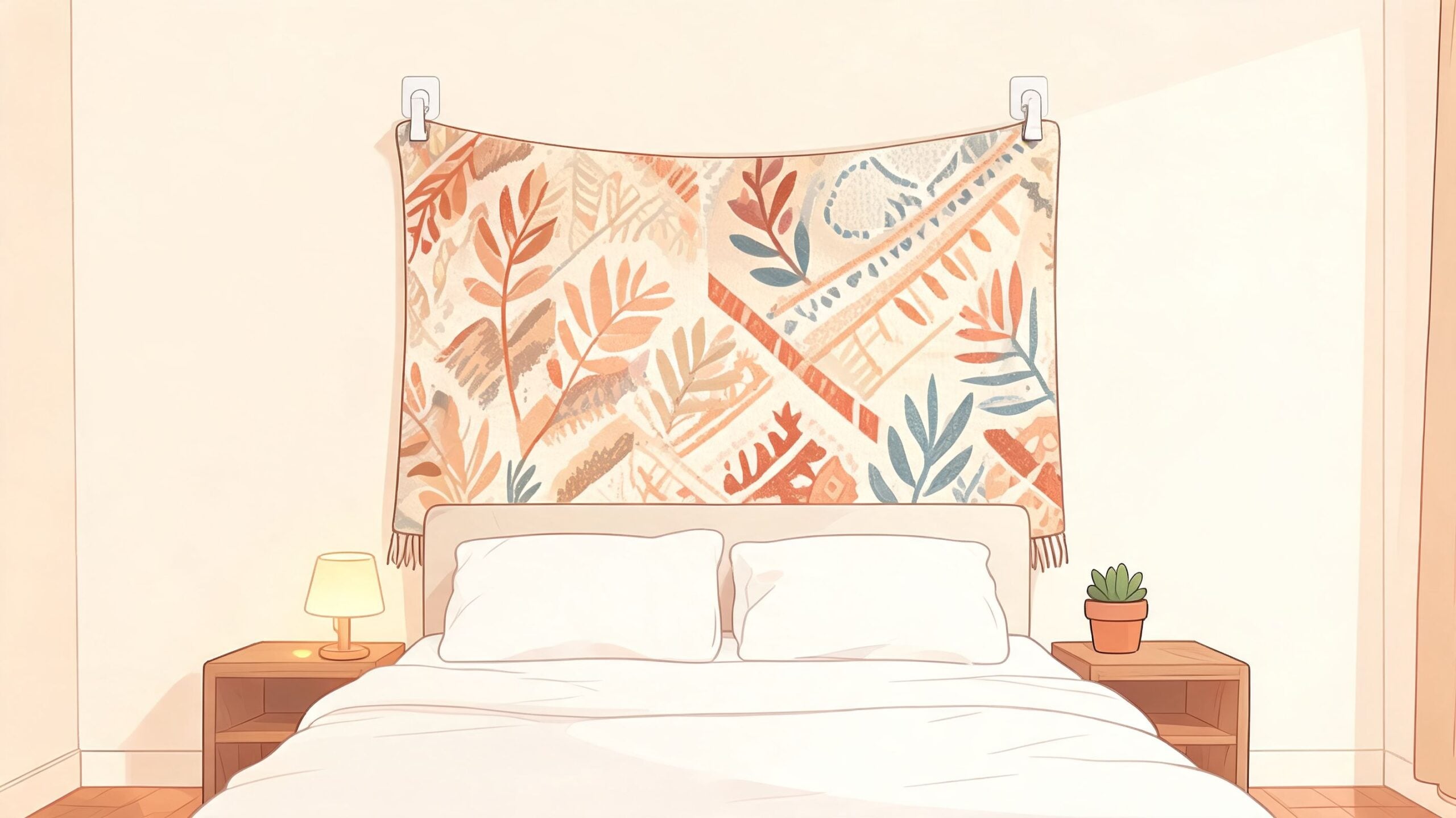
Hang textiles for softness and easy swaps
Textiles solve a problem that paint can't. They soften sound, add warmth, and make the room feel less rigid. A quilt, flat-weave rug, or tapestry can all stand in for a traditional headboard if the scale is right.
A few rules make the result look more finished:
- Keep the width close to the bed width or slightly wider
- Hang it high enough that pillows don't hide the design
- Use a rod or concealed hanging system so it doesn't droop
- Choose flatter fabrics over thick, bulky rugs if the wall hardware is minimal
This is also one of the easiest ways to change the room seasonally. Lighter woven fabric feels right in spring and summer. Heavier textiles bring more visual warmth once colder weather settles in.
If you want a few more low-lift ideas before starting, these simple ways to transform your bedroom can help you coordinate the wall treatment with the rest of the space.
Creative Upcycling for a One-of-a-Kind Look
Upcycled headboards have a different appeal than painted or removable options. They bring history, irregularity, and just enough imperfection to make a room feel collected instead of staged. Done well, they look grounded. Done poorly, they look like leftovers nailed to a wall.
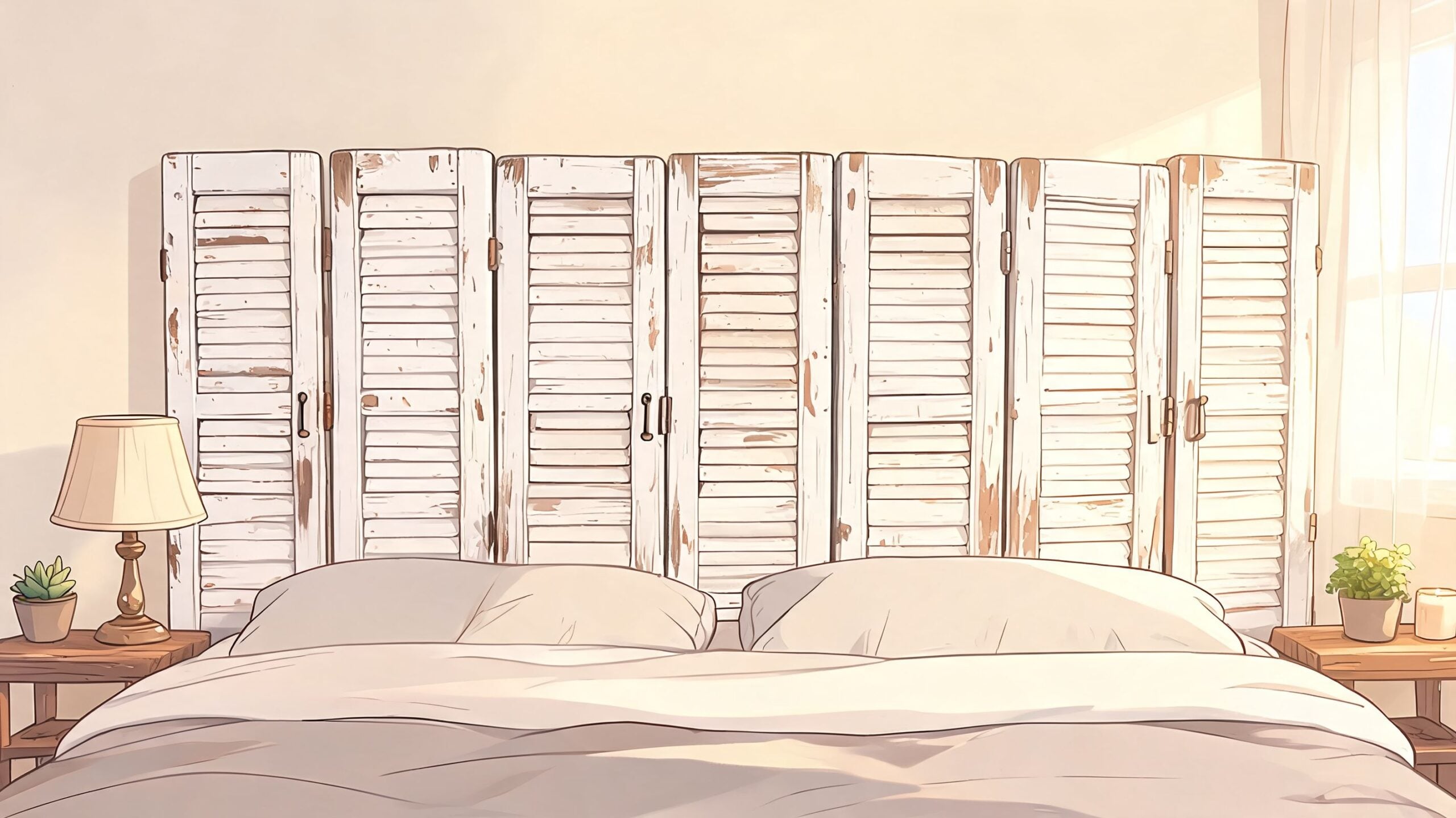
Old shutters and doors
Shutters are often easier to use than full doors because they're lighter and easier to center. A pair of distressed shutters can create height without overpowering the bed.
An old door can be beautiful, but it needs more thought. Solid wood doors are heavy, awkward to level, and sometimes too tall for the wall. If the proportions are off, the whole room feels top-heavy.
Check these before bringing one home:
- Condition of the wood so you know whether you're dealing with peeling finish, rot, or warping
- Backside stability because mounting hardware needs solid material
- Actual width relative to the bed so it doesn't look undersized
- Weight because that determines whether wall mounting is realistic
Salvaged pieces should look worn, not unsafe. Character is fine. Splinters, failing joints, and unstable hardware aren't.
Window frames and architectural fragments
Old window frames work best when the glass is removed or replaced with safer inserts. They bring shape and rhythm, which helps if the room needs definition but not mass.
This approach suits cottage, farmhouse, and mixed-vintage interiors. It's less effective in sleek modern rooms unless you intentionally balance it with cleaner bedding and simpler nightstands.
A good prep routine includes:
- Cleaning thoroughly with special attention to dust trapped in corners and joints
- Light sanding so the surface feels finished, not flaky
- Sealing the piece if you want to preserve the existing patina
- Mounting into studs or with appropriate hardware if the item is heavy
Safety matters more than charm
This is the stage people overlook. Older materials can be rough, brittle, or heavier than expected. If a piece sits directly behind where you sleep, it has to be secure.
What usually works best is mounting the item cleanly and keeping the bedding calm around it. Let the upcycled piece be the visual interest. Don't pile on too many competing patterns.
If you're restoring the wood itself before installation, these practical pointers on how to refinish wood furniture are worth reviewing so the final finish looks intentional rather than patchy.
Building an Architectural Headboard Feature
When you want the bed wall to feel built in, not decorated, architectural alternatives are the strongest option. These are the projects that change the room most. They also demand better planning, cleaner execution, and more respect for materials.
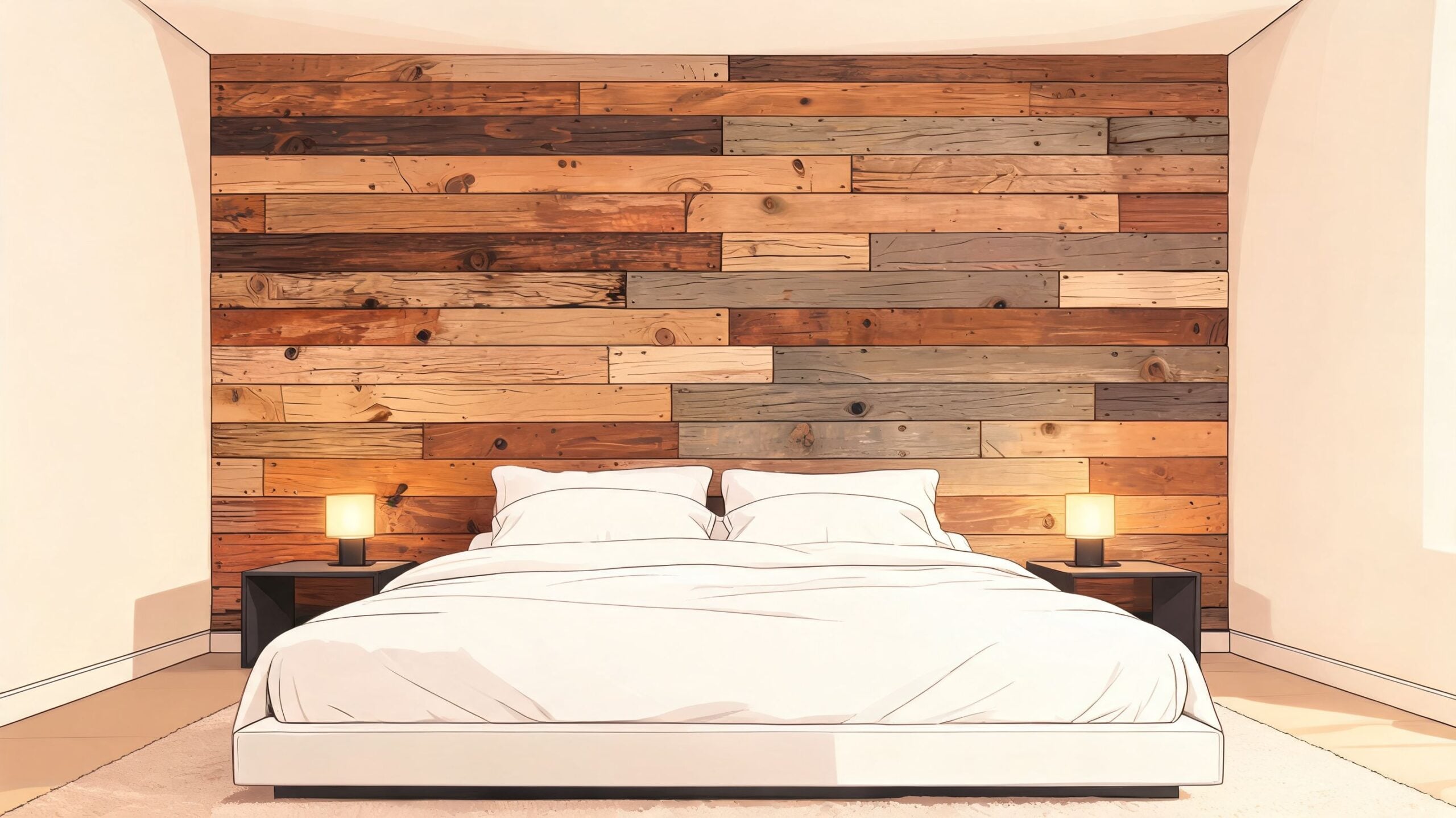
Reclaimed wood wall behind the bed
A wood wall gives instant depth and warmth. It works especially well in Upstate homes where natural texture doesn't feel forced. The biggest mistake is skipping prep and treating reclaimed wood like it's ready to install the minute it comes home.
For a pallet-based version, one detailed method summarized by Taskrabbit's headboard ideas guide recommends selecting 8 to 12 standard 48×40-inch heat-treated pallets, disassembling them, sanding the boards to 180-grit, sealing them with two coats of Minwax Polycrylic, and fastening them into studs with 3-inch galvanized screws. That same methodology notes that proper sealing matters for longevity and that over-tightening fasteners can crack boards.
If you prefer to study cladding patterns before laying out boards, this explanation of internal wood cladding is a useful visual reference for orientation, spacing, and finish choices.
A reclaimed wood wall usually works best when you:
- Sort boards by tone first so the wall looks balanced rather than random
- Lay out the pattern on the floor before mounting anything
- Seal every exposed face if the wood is rough or dusty
- Stop at the right width instead of wrapping the whole room unless the room can handle it
What doesn't work is a patchy install where one section is glossy, another is dry, and the board spacing drifts as you go.
Upholstered wall panels for comfort and polish
If wood adds character, upholstered panels add calm. They're one of the best alternative headboard ideas when you want softness, cleaner acoustics, and a more refined finish.
A durable build starts with the right materials. For a DIY upholstered panel headboard, high-density foam at 2.2 lb/ft³ and fabric rated at 50,000+ on the Wyzenbeek rub test are key, and when the panel is mounted properly with a French cleat, it can have a 25-year lifespan and add R-5 insulation value, according to this LuxDeco overview of alternative headboard designs.
That specification tells you a lot about what separates a polished panel from a flimsy one. The foam needs enough density to hold shape. The fabric needs enough durability to survive regular use. The mounting needs to be solid.
A practical build sequence looks like this:
- Frame the panel with straight, dry lumber.
- Attach the foam and batting evenly so the surface stays smooth.
- Pull the fabric tightly and staple from the center outward to avoid ripples.
- Use a French cleat or direct stud anchoring for safe mounting.
A sagging upholstered panel almost always comes back to one of three things. Weak foam, poor fabric tension, or uneven stapling.
Which architectural route makes more sense
Choose reclaimed wood if the room needs texture and a bit of ruggedness. Choose upholstered panels if the room needs softness, comfort, and a quieter look.
The choice also depends on how you use the bed. If you read or watch TV in bed regularly, padded panels are more forgiving. If you want the wall itself to do most of the styling work, wood often carries the room more confidently.
Styling Your New Headboard for a Cohesive Design
A headboard alternative shouldn't feel like a one-off project. It should connect to the bed, the lighting, the nightstands, and the room's overall balance.
Get the scale right
The easiest way to make a creative idea look expensive is proper proportion. The feature should usually be at least as wide as the bed, and in many cases slightly wider. Too narrow, and it feels accidental. Too tall, and the room starts to feel visually crowded.
If the ceiling is low, emphasize width. If the room is narrow but has decent height, vertical panels or tall shutters can help draw the eye upward.
Use lighting to finish the wall
Lighting often decides whether the bed wall feels complete. Sconces make a painted or upholstered feature look more architectural. Lamps keep things softer and easier to change later.
A simple checklist helps:
- Match the visual weight of the lighting to the feature behind the bed
- Keep bedside heights consistent so the wall feels balanced
- Use warm bulbs if the room has wood or earthy textiles
- Leave enough negative space so art, fabric, or panels can breathe
The wall behind the bed doesn't need more accessories. It needs the right ones.
Tie it back to the rest of the room
Nightstands, bedding, rugs, and window treatments should support the new focal point, not compete with it. If the wall is bold, simplify the bedding. If the wall is subtle, bring in more texture through throws, pillows, or a bench.
The headboard area determines whether many rooms come together or fall apart. A reclaimed wood wall with glossy mirrored nightstands can work, but only if something else in the room bridges the gap. A soft upholstered panel with cold industrial lighting can feel mismatched for the same reason.
If you want help layering the final details, these ideas for accessorizing the bed of your dreams are a smart next step.
If you're ready to turn inspiration into a room that works for your home, Tip Top Furniture & Mattresses can help. Visit our historic Freehold, NY showroom to explore bedroom furniture, Amish-made pieces, custom order options, mattresses, décor, and flooring all in one place. If you're planning around a budget, ask about flexible financing and browse the clearance selection. If you want to visualize the room before buying, try the free online room planner or talk with our design team for personalized guidance.